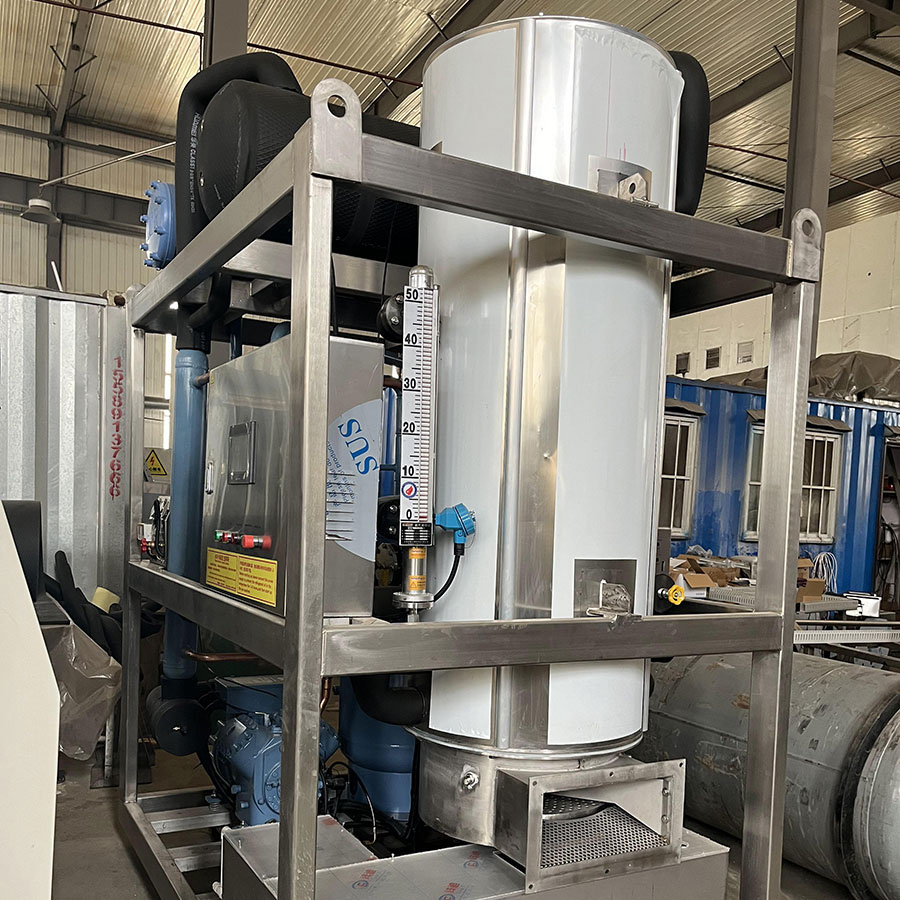
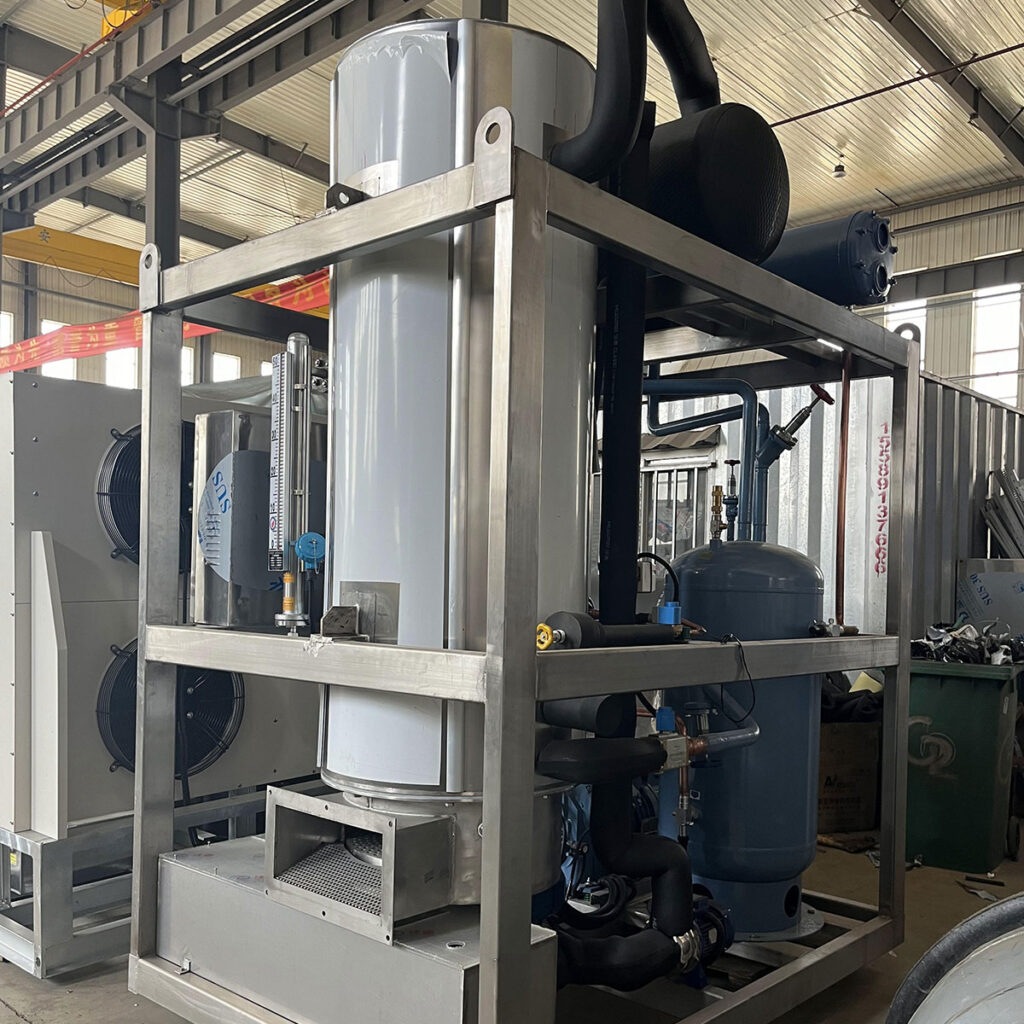
304 food grade stainless steel (mainstream in the market) Sanitary standard, resistant to freshwater corrosion, smooth inner wall without easy scaling, easy to clean; Food, seafood, and supermarket ice making are preferred choices; Medium thermal conductivity and long service life.
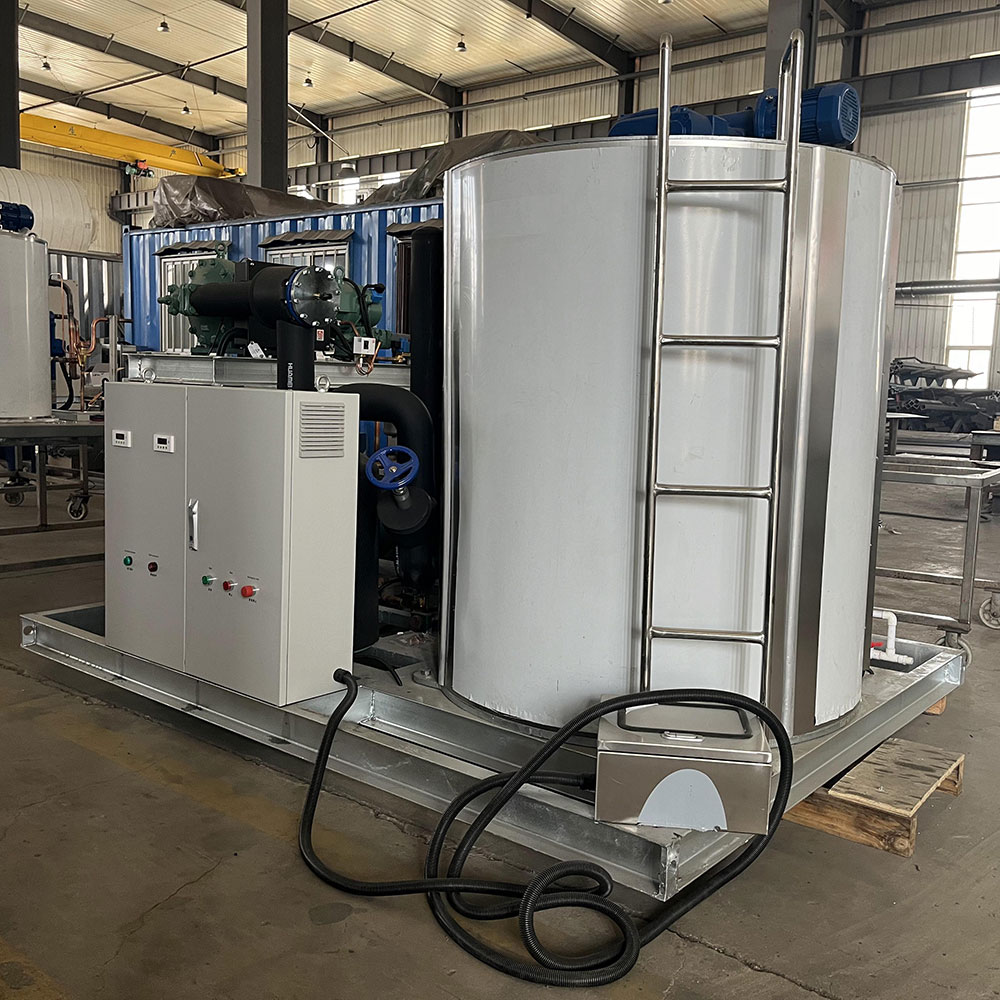
Carbon steel coated with hard chromium (industrial large-scale flake ice machine) Thermal conductivity is superior to stainless steel, with fast ice making speed and high production capacity; Chrome plating is wear-resistant. Shortcoming: Once the coating is damaged, it is prone to rusting and not suitable for food conditions.
316/316L stainless steel (high-end seawater/chemical scene) Resistant to chloride ion corrosion, suitable for making ice in seawater for fishing boats and cooling salty materials; High cost.
Copper/Copper Alloy (Block Ice Evaporator Ice Mold) Excellent thermal conductivity; Weak corrosion resistance, generally treated with anti-corrosion coating.
Titanium material (under strong corrosive saltwater conditions, rarely used) Super strong salt corrosion resistance, extremely high cost, mostly used as special equipment for offshore seawater ice making.