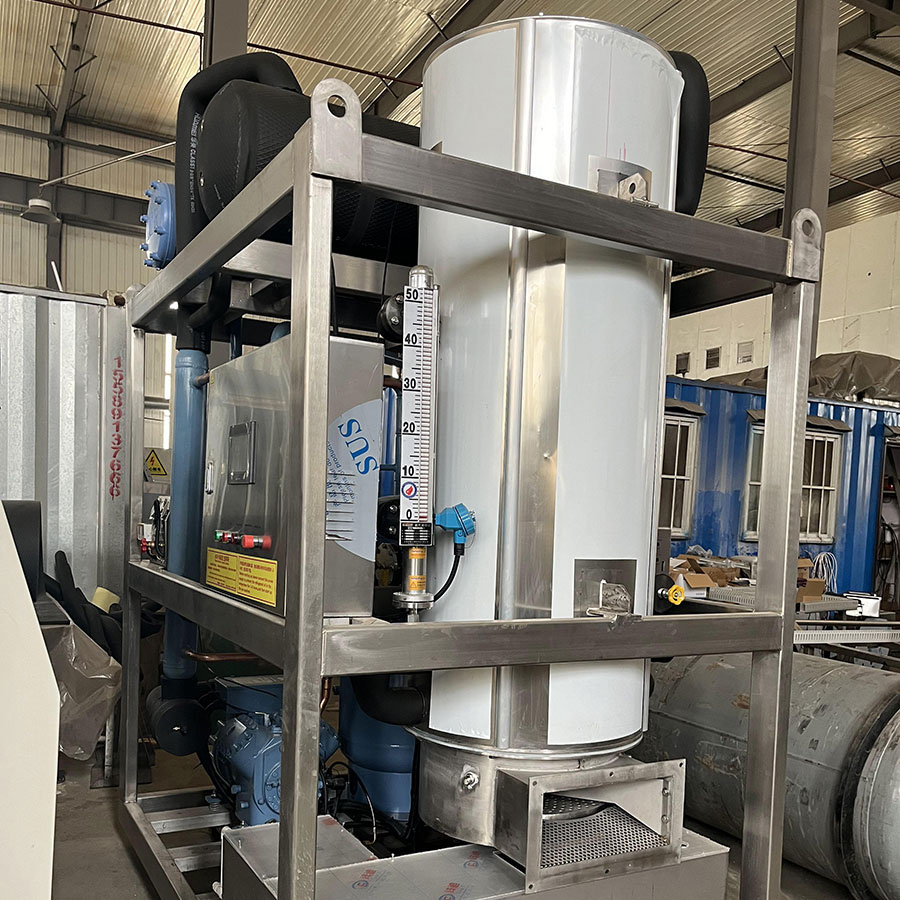
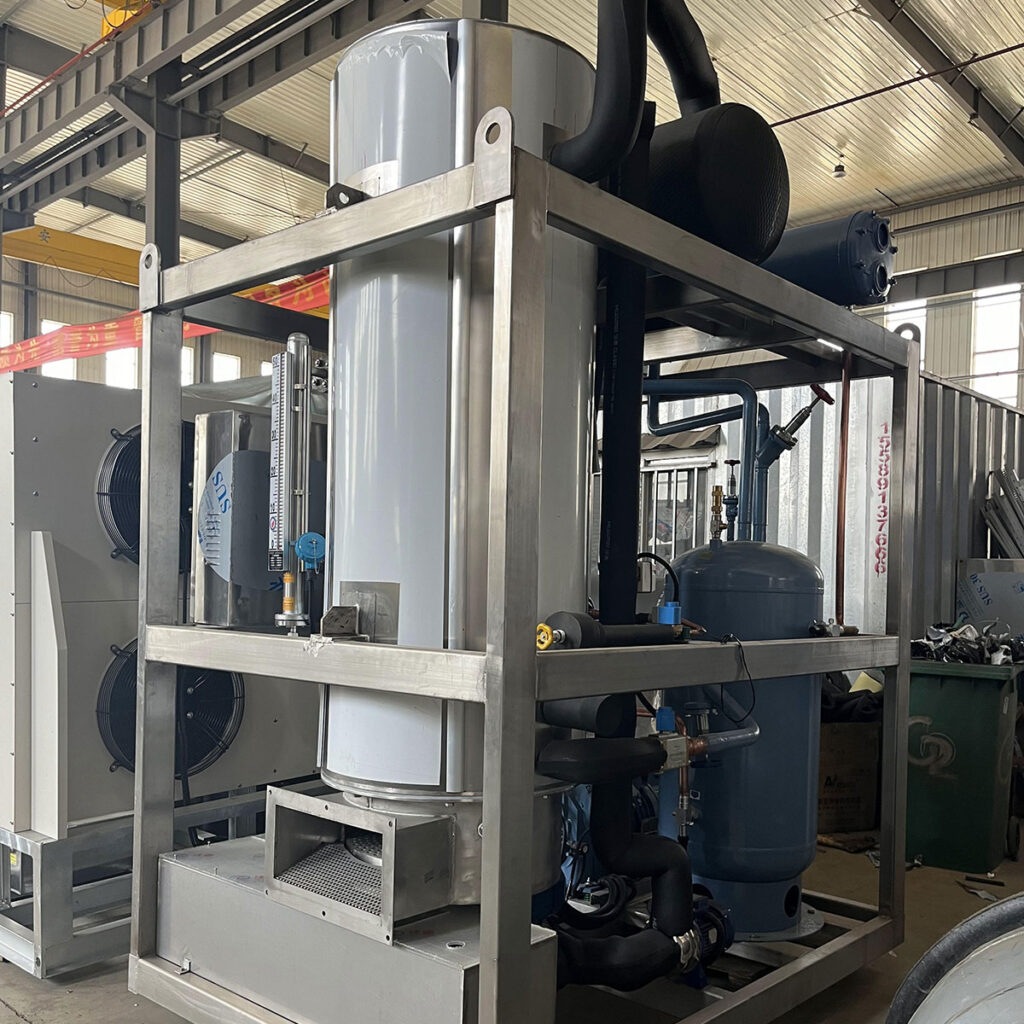
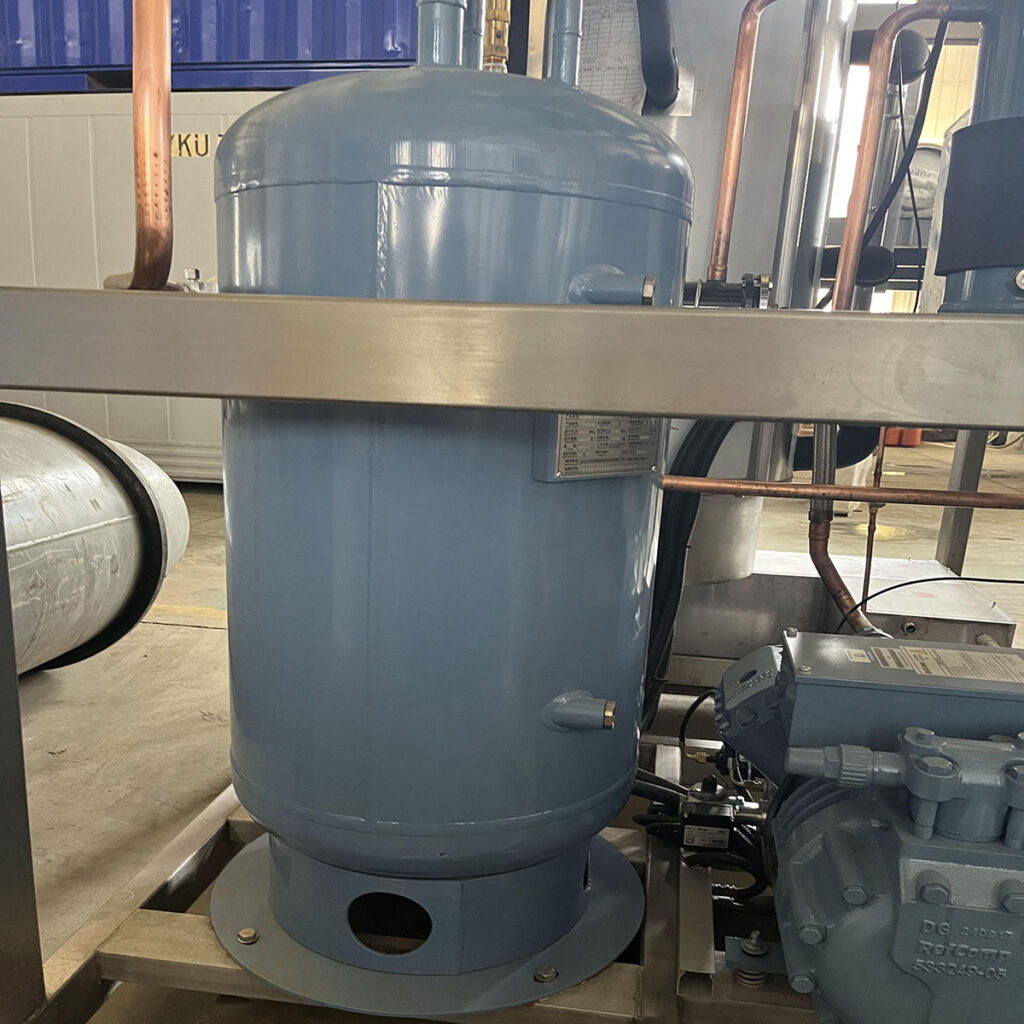
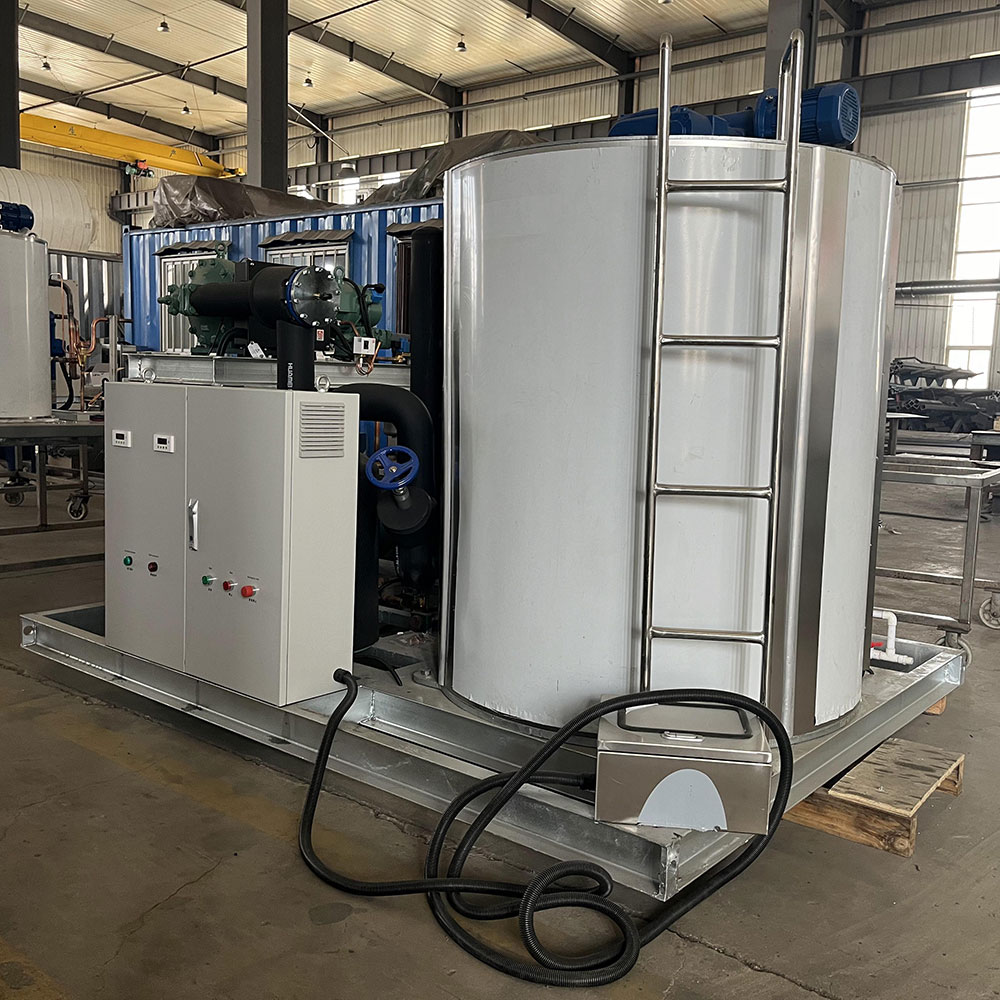
Large scale flake ice machines generally refer to those that can produce 1 ton or more per day. The characteristics of flake ice include thin flakes, large contact area, fast cooling speed, no sharp corners, good fluidity, and the ability to tightly wrap materials.
- Aquaculture industry (largest usage)
-Fishing ports, seafood processing plants, and seafood wholesale markets: Quickly pre cool and preserve fish, shrimp, and shellfish after fishing, inhibit bacterial growth, and extend the shelf life of fresh/frozen products.
-Ocean going fishing boats and aquaculture bases: seawater type ice making machines that directly use seawater to make ice and preserve products on board. - Meat processing
-Slaughterhouse, beef and mutton/pork cutting workshop: body cooling, fresh meat preservation;
-Meat processing plant (meatballs, sausages, ham): Reduce the temperature of the mixed ingredients, control the temperature of the meat filling, and prevent the meat from deteriorating due to heating during processing. - Large scale engineering concrete cooling (dams, bridges, nuclear power plants)
When pouring large volume concrete during high temperature seasons, cement hydration will release a large amount of heat, which can easily lead to temperature cracks. Directly adding ice flakes to the mixing plant to replace some of the mixing water can quickly reduce the temperature of the concrete entering the warehouse.
Typical projects: hydropower dam, nuclear power plant foundation, large bridge pier.
A classic heavy-duty scenario for large-scale ice machines, commonly used for models weighing 5 to 50 tons, equipped with ice storage warehouses and spiral ice conveyors. - Fruit and vegetable preservation and cold chain
-Pre cooling for fruit and vegetable picking: Quickly cool down vegetables, fruits, and edible mushrooms after picking to reduce respiration;
-Fruit and vegetable sorting center, preservation warehouse: container packaging for preservation. - Process cooling in the chemical and pharmaceutical industries
Low temperature control of chemical reaction kettle and cooling of raw material production; The crystallization process of some chemical products requires clean low-temperature ice. Food and pharmaceutical evaporators generally require 304 stainless steel material. - Other scenes
-Artificial ski resorts and ice and snow amusement parks: snow making assistance, ice rink foundation laying;
-Mine cooling: cooling of deep mine working faces;
-Supermarket cold chain and fresh food distribution center: Fresh goods preservation.