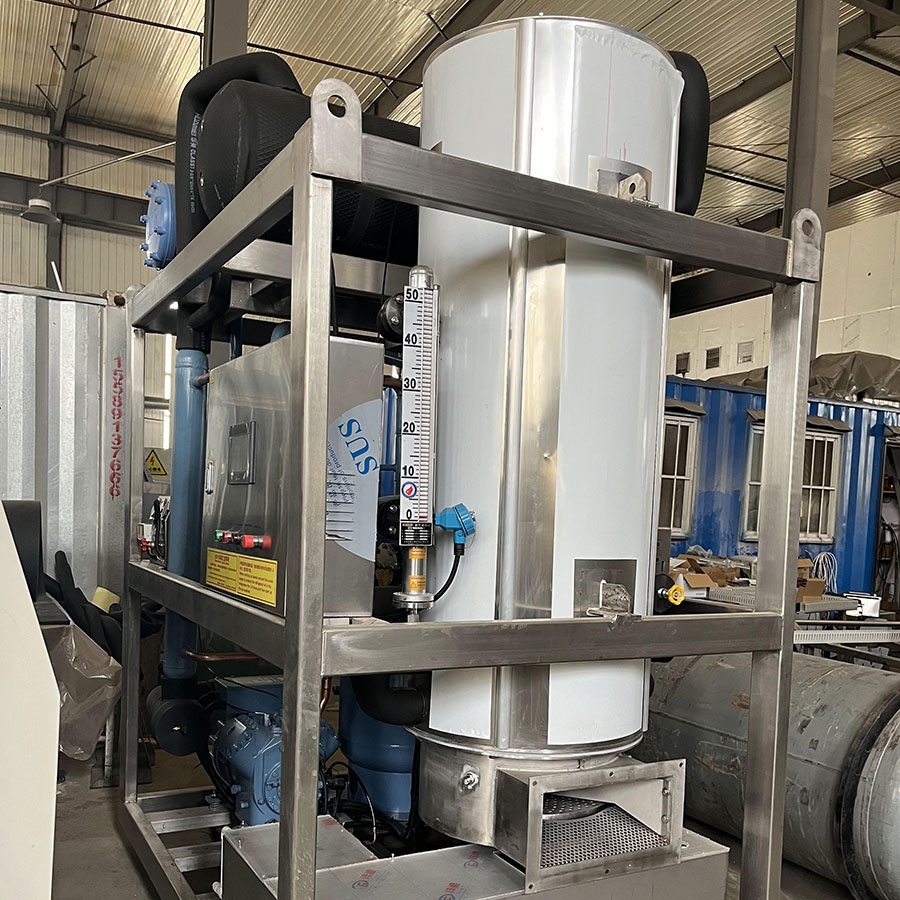
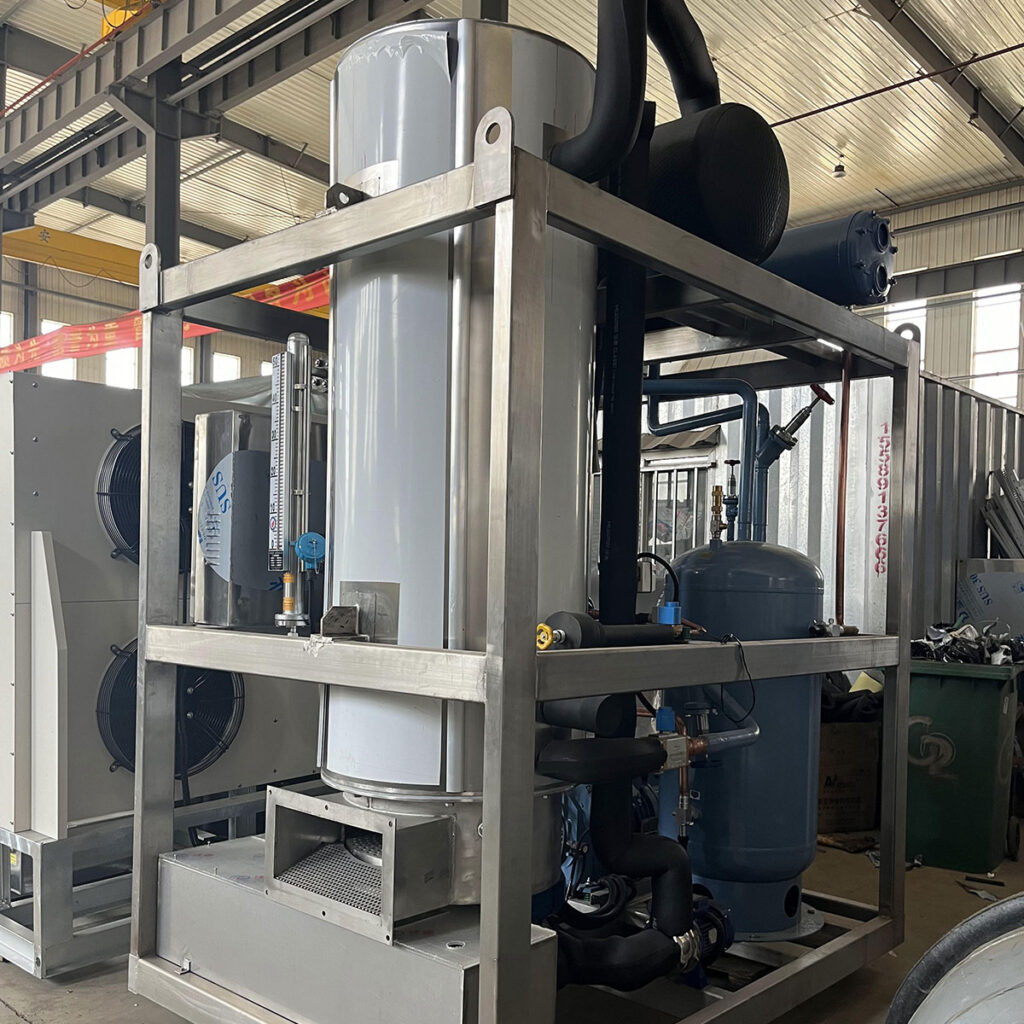
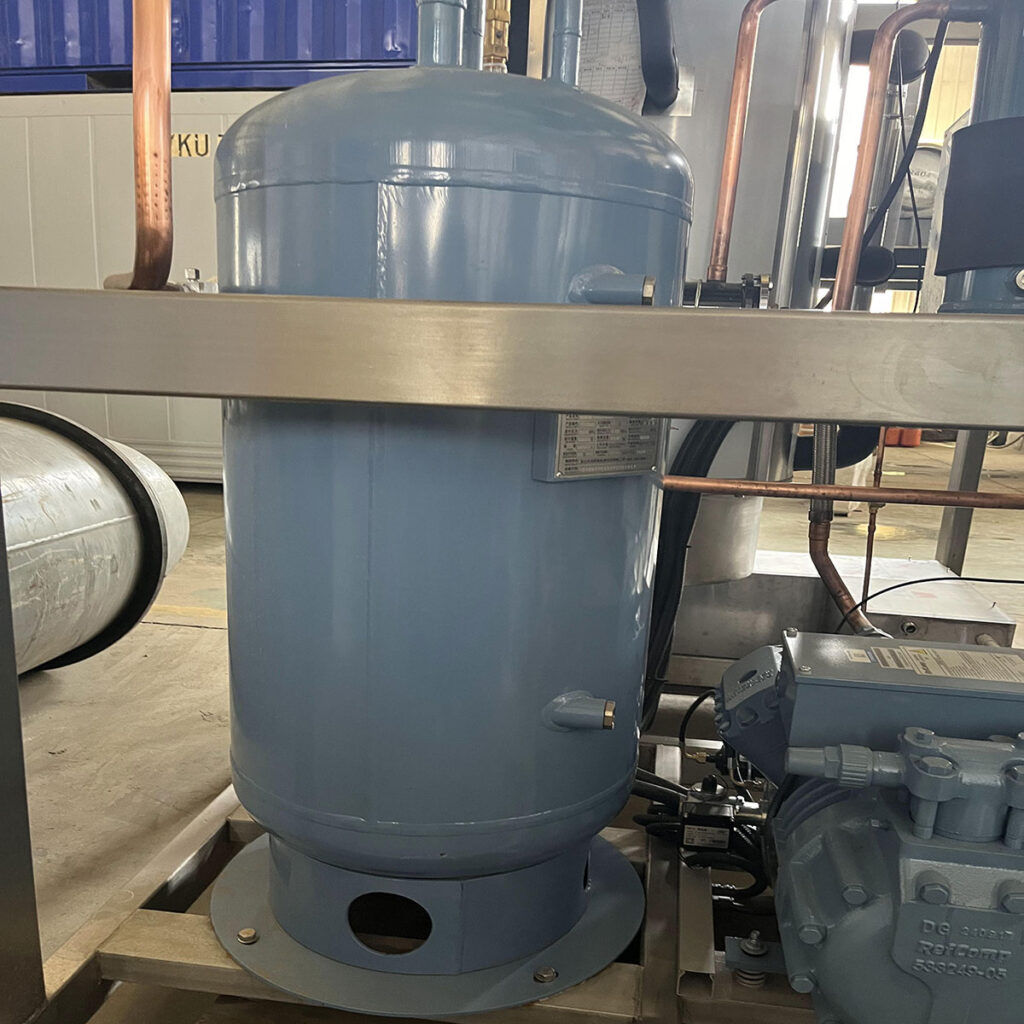
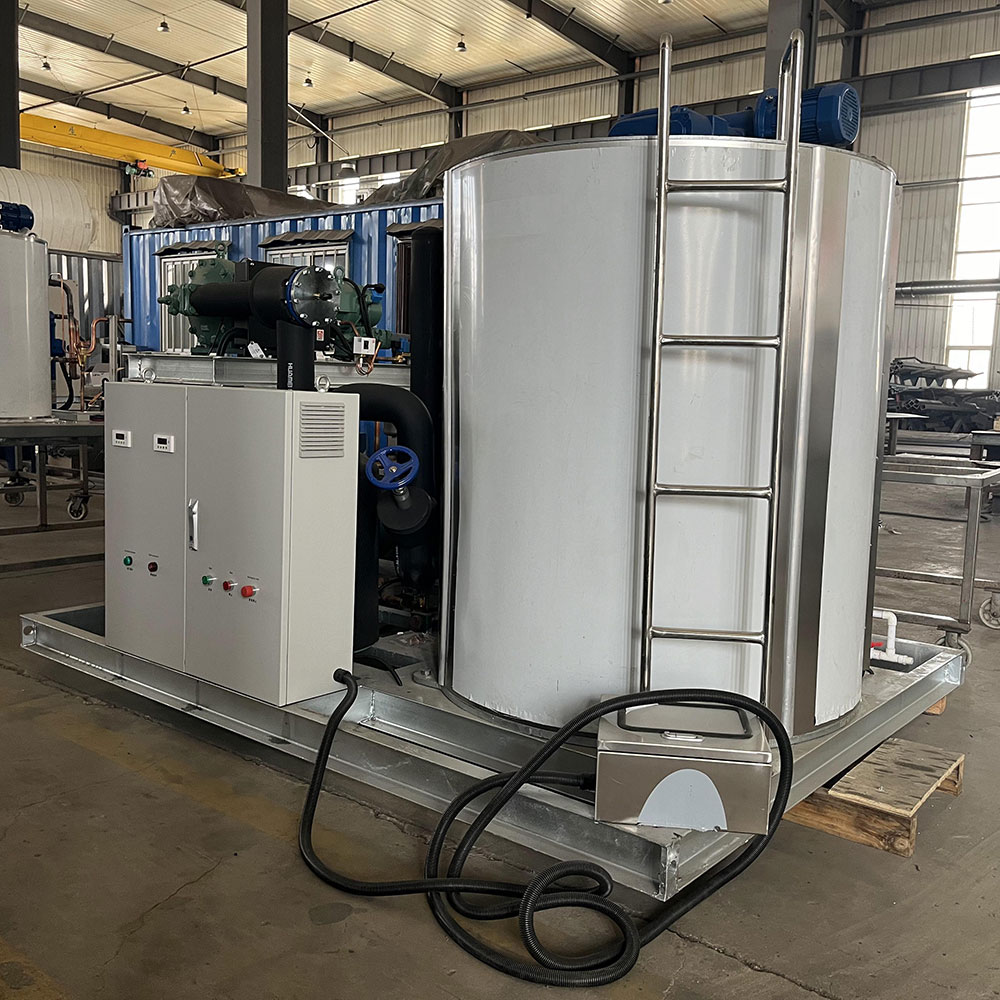
1、 Ice production capacity (core indicator)
a. Choose based on actual peak ice usage, rather than daily average usage; Suggest reserving 15% to 30% margin to cope with high temperatures and sudden ice usage in summer.
b. Distinguish daily production/hourly production: Large equipment is generally labeled with 24-hour daily ice production. When the on-site environment temperature is high and the water temperature is high, the actual ice production will decrease.
c. For example, if you need to use 10 tons of ice consistently throughout the day, it is recommended to choose a 12-15 ton model.
2、 Water quality conditions
Ice flakes are water that freezes on the surface of a drum, and the water quality directly affects the ice quality, scaling, and equipment lifespan
a. Ordinary tap water: equipped with a simple filter;
b. Groundwater/high hardness water: Softening water equipment must be equipped, otherwise the drum will quickly scale, heat exchange will deteriorate, and energy consumption will soar;
c. Food and pharmaceutical scenarios: It is recommended to add reverse osmosis pure water devices to meet hygiene standards;
d. Inlet water temperature: Try to control ≤ 25 ℃. As the inlet water temperature increases, the ice making efficiency decreases significantly.
3、 Refrigeration system configuration
a. Compressor: Mainstream brands of large machines (such as Gulun and Bitzer), with two condensation methods: air-cooled and water-cooled
-Air cooling: easy to install, no need for cooling towers, suitable for water scarce areas; Low refrigeration efficiency and excessive noise in high-temperature environments
-Water cooling: high heat transfer efficiency, lower power consumption, suitable for continuous 24-hour production; Supporting cooling towers and circulating water tanks are required, and the site should have drainage facilities
b. Refrigerant: Confirm the refrigerant model (R404A, R507C, etc.) and pay attention to local environmental protection and maintenance parts supply.
c. Heat exchange drum: focus on material – prioritize 304 stainless steel drum in the food industry; Carbon steel can be nickel plated for industrial cooling.
4、 Industry and Ice Quality Requirements
-Fishery preservation, commercial supermarket cold chain: dried ice flakes, less crushed ice, thickness of 1.5-2.5mm, large contact surface, fast cooling
-Concrete cooling (mixing plant): requires high hardness of flake ice, dry ice, no excessive free water, and ice thickness of 2-3mm
-Food processing and seafood processing: The whole machine is made of 304 stainless steel, which complies with food hygiene, has a sealed structure, and is easy to clean
-Cooling of chemical reaction kettle: Pay attention to the moisture content of ice flakes, and avoid diluting materials with low moisture content
5、 Ice storage and transportation matching (easily overlooked for large-scale projects)
a. Continuous ice making, but intermittent use of ice → must be equipped with an ice storage warehouse/freezer, pay attention to insulation and prevent ice clumping;
b. Long distance ice delivery: spiral ice delivery machine, belt conveyor, estimated conveying loss;
c. Attention: Ice flakes are prone to sticking, and the storage time should not be too long. Try to make and use them on the spot.
6、 Power supply, installation site, and maintenance
a. Power supply: Large models mostly use 380V three-phase electricity, calculate the total power, reserve cable capacity, and have a large starting current;
b. Space: equipment+maintenance space+ice storage bin+supporting facilities (cooling tower/water pump), pay attention to the floor height;
c. Environment: The factory building should be ventilated and avoid direct sunlight exposure. High temperature environments can significantly reduce ice production;
d. Maintenance convenience: Whether the drum, scraper, water pump, and filter are easy to disassemble and replace, and the supply cycle of accessories.
7、 Energy consumption, automation, and control
a. Unit ice energy consumption: Compared to kWh/ton ice, water-cooled models generally have better energy consumption than air-cooled models;
b. Control system: equipped with PLC automatic control, water shortage protection, overload protection, high and low voltage alarm, automatic shutdown;
c. Optional features: timed ice making, remote monitoring, automatic cleaning function (recommended for the food industry).